
Blog post: War in South Kivu-DRC & Minority Protection: Policy Options
Delphin Rukumbuzi Ntanyoma
Military confrontation between the Democratic Republic of Congo (DRC), Burundi and Rwanda is, directly or via proxies, devastating the South Kivu region. No single day passes without hearing drone blasts or sophisticated weaponry around Minembwe. Since 2017, this war has remained underreported. A small window for action emerged in London in June 2026 during the Joint Oversight Committee between the DRC and Rwanda. Its final communique called specifically for: De-escalate tensions immediately, especially around Minembwe, and to use their respective influence with all parties on the ground to achieve this aim.
For decades, the eastern DRC, comprising mainly North Kivu, South Kivu, and Ituri provinces, has been confronted by waves of violence affecting local populations. The most recent episode erupted in late 2021 as the Mouvement du 23 Mars (M23), backed by Rwanda, launched hostilities against the Congolese armed forces in North Kivu. M23 now controls large swathes of territory across North Kivu and South Kivu.
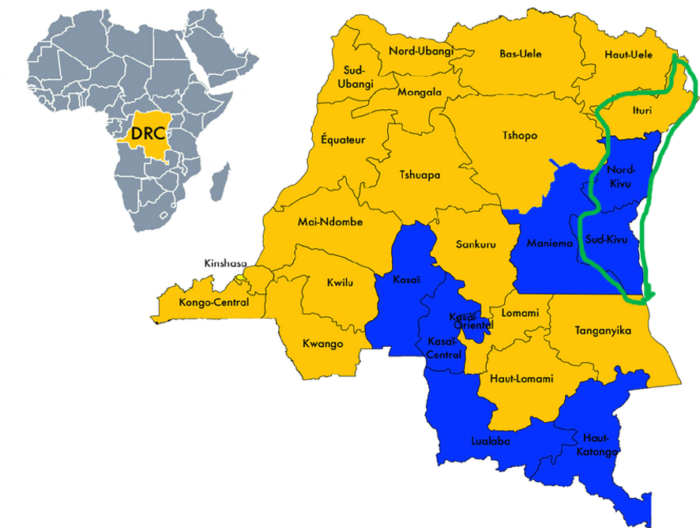
Figure 1: Map of the eastern Democratic of Republic of Congo
Note: South Kivu, North Kivu and Ituri are the most conflict-prone regions in the Eastern DRC.
Since the rebel group withdrew from Uvira (January 2026), military confrontations moved away from the attention of the international community. It is being fought in the southern South Kivu highlands and around Minembwe, where communities and local populations are desperate.
This research note draws on research in South Kivu, and the key highlights of the April 2025 Bradford Banyamulenge Workshop — a two-day conference co-organised by the University of Bradford and the Office of the Lord Mayor of Bradford. It builds on recent reports by Human Rights Watch (HRW – see also Sept 2025 report), the United Nations Office for the Coordination of Humanitarian Affairs (UNOCHA), and the International Committee of the Red Cross (ICRC).
In this note, I make the case that preventing further escalation in South Kivu requires targeted international policies that go beyond humanitarian appeals to address the discrimination and targeted violence against ethnic minorities and tackle the deliberate siege and imposed humanitarian blockade, and the structural absence of the state authority. Failing to account for these factors opens up room for regional actors to instrumentalise local grievances and conflicts.
A Crisis hidden in the remote mountains
The Democratic Republic of Congo (DRC) is the second largest country in Africa in terms of geographical size. Alongside Sudan, the DRC is ranked among the first humanitarian crises in Africa. For several reasons, including the remoteness, South Kivu’s southern Highlands’ crisis (Fizi, Itombwe and Uvira) is among the most underreported crisis in the Eastern DRC. Moreover, one of these many issues is the discrimination against minority ethnic communities.
In April 2026, Human Rights Watch (HRW) asserted in its “DR Congo: Aid, Movements Hindered in South Kivu Highlands” report that belligerents “are interfering with aid delivery and preventing civilians from fleeing fighting”. In this report, HRW stated that “more attention is needed for this vastly underreported conflict, or this bad situation will get even worse.”
While there are many challenges in delivering humanitarian assistance in the whole eastern DRC, the December 2025 United Nations Office for the Coordination of Humanitarian Affairs (UNOCHA) confirmed that the Highlands, Itombwe, and Minembwe are severely affected and the local populations are effectively besieged and lack access to essential services, including medical care. Prices of basic products such as sugar have incrementally increased. In Minembwe, for instance, one of the localities that shelters the remaining Banyamulenge who fled their localities since 2017 onwards, a kilogramme of sugar costs $40. This is unique in Minembwe as its surrounding areas, the same Kg costs $3.20-$3.50 in the surrounding localities of Minembwe region. Such humanitarian severity is largely driven and linked to the ethnic affiliation of most local populations living on this region – the Banyamulenge.
Who are the Banyamulenge
Historically, scholars and researchers agree that the Banyamulenge settled in DRC well before the colonial period. Some sources argue that they have lived in DRC since the 17th - 18th Century. Their homeland is South Kivu province, namely Fizi, Mwenga, and Uvira territories (see figure 2). In the 1970s, some Banyamulenge families moved to Katanga province, namely Vyura localities, currently located in Tanganyika province.
Regardless of this long history of presence in the DRC, members of the Banyamulenge community are still contested and discriminated against on the basis that they are not fully Congolese, seen rather as “invaders”. In 1998, all Banyamulenge who settled in Katanga, approximately 20,000 individuals, were chased away as part of effort to get rid of “invaders”. Since the 1990s, scenes of destruction have targeted the Banyamulenge villages and localities in South Kivu and largely intend to expel the foreigners.
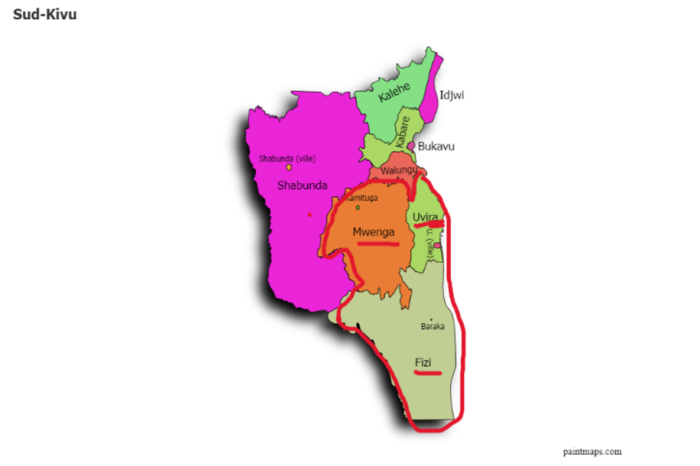
Figure 2: Map of the Fizi, Mwenga and Uvira territories
Note: The three southern South Kivu territories where the Banyamulenge have lived for centuries.
The main driver of violence against the Banyamulenge is that they are perceived as “strangers and foreigners” in their own country. Scholarship and researchers tend to agree that during the colonial period, the Banyamulenge were portrayed as “newcomers” due to their culture, language, and physical appearance. The racialised classifications during the colonial period set a tone for the persistent discrimination and persecution of the Banyamulenge.
Since the DRC’s independence in 1960, politicians have manipulated their constituencies, provided support to militias, and regularly engaged in dehumanising campaigns for political and electoral reasons. From the 1970s to 1990s, the Banyamulenge were denied the right to vote, their citizenship stripped out, and the Congolese state resolved to expel them in 1995.
In the 1996 to 1998 wars, the Banyamulenge and some foreign nationals were systematically killed across the DRC based on their “physical characteristics”; and attacks followed public speeches of government officials, ministers, and military generals who called the public and masses to eliminate the “scums and vermin”. In 2004, the Banyamulenge were deliberately murdered in Burundi, whilst supposedly under UNHCR protection.
More recently, members of the Banyamulenge community have been targeted by violence that destroyed almost everything, including villages, cattle and social infrastructures. Meanwhile, national and local politicians have resorted to online hate speech and mobilisation to create resentment against the Banyamulenge. Political figures, military soldiers and members of the civil society organisations have openly claimed that they will use their power to expel all the Banyamulenge from the DRC.
Amid the widely reported clashes between the Congolese army and the M23 rebel group — backed, according to UN experts, by Rwanda — a quieter catastrophe is unfolding in the highlands of South Kivu that has received far less international attention: the progressive isolation, impoverishment, and targeted persecution of the Banyamulenge and other minority ethnic communities. The 2012 defeated rebellion known as M23 resumed , particularly Rwanda and Burundi are likely settling accounts in a confrontational move that started in 2015.
Siege, starvation, and ethnic targeting
As the UNOCHA’s report states, the humanitarian situation in the South Kivu highlands — the territories of Fizi, Mwenga, and Uvira — is, by any standard measure, dire and severe. Since February 2026, intense fighting in and around the Minembwe highlands had displaced tens thousands of civilians. Human Rights Watch has confirmed that local populations are effectively besieged and have been denied access to essential services, including medical care. These conditions are more acute in the region inhabited by members of the Banyamulenge community, something that is largely compounded with their ethnic affiliation.
Following a dire humanitarian access mission of the International Committee for Red Cross (ICRC) to Minembwe, Mikenge, Point Zero, and Kipupu in early late April 2026, ICRC, described this situation as a "very worrying". The security situation is marked by the gradual collapse of health facilities, acute shortages of medicine and food, and communities progressively cut off from the outside world by fighting. Pregnant women and children have been among the hardest hit, with an alarming increase in maternal and infant mortality.
There is also evidence of a deliberate and sustained blockade. This is happening in a region where many families have lost their sources livelihood due to the fighting, and where most families in the southern South Kivu highlands have been impoverished as their cattle were pillaged and access to farming fields is denied.
Even though the reporting of most recent violence in eastern Congo is highly understood in relation to the resurgence of M23, violence in the Highlands of Fizi, Itombwe and Uvira erupted and constantly evolved from the 2015 regional confrontations between Rwanda, Burundi and DRC. Consequently, thousands of civilians are estimated to have been killed since 2017. More than 408 villages were burned to the ground, and nearly half a million cattle — the community's principal livelihood — were looted or destroyed. The large majority are Banyamulenge civilians, villages and their properties.
Following recurring attacks on those perceived as “foreigners”, thousands Banyamulenge fled the DRC. Those remaining in their homeland have been confined to a few and tiny localities, unable to move freely across Congolese territory — a restriction that does not apply to other communities. In recent months, there have been drone strikes that intensified followed the withdrawal of the rebel group, M23 in Uvira. There have been constant attacks of drones and sophisticated weaponry in civilians’ villages with no clarity as to whether the strikes targeted military objectives.
These are not the incidental casualties of a generalised conflict. Attacks were largely driven by the contestation of local administrative entities erected or operating in areas with many Banyamulenge. The Banyamulenge — a Congolese minority community whose presence in South Kivu pre-dates the colonial era — has been subjected to contestation including citizenship revocation and state-led decision to expel them to Rwanda and Burundi in 1995 and continued targeted attacks violence, amounting for a slow genocide.
What makes this crisis particularly misunderstood is how such a complex conflict with local and regional actors engineered to asymmetrically target a minority group is simplified from inter-ethnic community violence. Local armed groups, the Congolese national army (FARDC), and regional actors have coalesced to collectively attack the Banyamulenge civilians whom they believe are foreigners or agents of Rwanda. The group is perceived as inherently threatening, polluting, or illegitimate; and any (un)grounded reason (security, land, identity, history, balkanisation) becomes sufficient to justify violence or removal. Even when Rwanda is (in)directly involved in forms of “forced compliance violence” to the Banyamulenge, attacks against members of this community from local and regional actors will still find a justification or a buy-in approval. This inter-community framing has penetrated UN-affiliated reporting (MONUSCO and UN Group of Experts), which tends to reduce the violence to generic "inter-ethnic clashes". It then obscures the asymmetry between a minority community under siege and the armed coalitions including foreign armed groups targeting them.
International response has fallen short
Understanding the gap between the scale of the crisis and the inadequacy of the international response requires examining several interlocking dynamics. The international media in the United Kingdom, and across Western countries have largely fallen short in their coverage of violence in South Kivu (at least in recent years: starting from 2017). Consequently, the voice of minority groups encounters a sort of systematic forms of “epistemic injustice” like other minority experiences. The communities whose suffering should be obvious is persistently rendered uncredible or invisible because they speak up by themselves for themselves. Media reports tend to follow countries discourses.
First, in DRC and Rwanda the conflict is predominantly oriented around the M23, regardless of what happened years prior to resurgence of the rebel group, and civilian suffering is reduced to the effects of “military operations”. Burundi has stationed thousands of soldiers in South Kivu, operating alongside the FARDC and Wazalendo militia groups, while the Banyamulenge self-defence group Twirwaneho has recently (officially in 2025) allied with M23 ― Rwanda, a development that has made the Banyamulenge’s protection politically regarded as sensitive. As a result, the UN bodies and humanitarian organisations apply an extraordinary caution around the Banyamulenge question for diplomatic or security reasons, leaving a protection vacuum precisely where it is most acute.
Second, remoteness and geographical inaccessibility are structural problems that shape media reluctance. When reported, the framing moves onto describing violence as mineral extraction, or the Rwanda–DRC confrontation which crowd out coverage of the South Kivu highlands and violence against civilians. Despite the remoteness and geographical inaccessibility, information scarcity is itself a product of the siege: the same conditions that starve people of food also starve the world of knowledge about what is happening to them.
Third, the Banyamulenge's contested status lends support to those attacking civilians and they tend to get empathy from the rest of the Congolese society. Their meagre political representation and limited advocacy networks tend to worsen their vulnerability.
Policy options
Below are a set of concrete, actionable policy responses that international actors — including the United Nations Security Council, the European Union, the African Union, and bilateral donors — should consider.
Recognising specifics and the need for at risks communities’ protection.
Violence in this region affects all local populations and communities. However, a disaggregated approach to account for why specific groups are targeted would enable accurate identification of patterns of targeted violence against minority communities. Existing reports and UN peacekeeping mandate do not account for the specifics and vulnerabilities of contested social groups like the Banyamulenge. An independent fact-finding mission would enlighten the UN and other international human rights organisations.
Neutral force and protection of civilians
As warring parties (regional and local actors) claim to fight for their security interests and those of their communities, establishing a neutral force and its deployment and presence in the Highlands would provide some guarantees to all warring parties.
Humanitarian access and accountability mechanisms.
The United Nations, the African Union, and regional bodies should move beyond general appeals and impose specific, monitored obligations on all warring parties to guarantee humanitarian corridors to the South Kivu highlands. DRC, Burundi and Rwanda should be held to account for the ongoing humanitarian blockades in the southern South Kivu Highlands. Sanctions should be extended to military commanders documented as responsible for blocking aid delivery or conducting drone strikes on civilian areas.
Prevent the proliferation of guns and ammunition.
There is documented evidence that the regional actors and namely the Congolese armed forces (FARDC) have supplied weapons and ammunitions to hundreds of thousands of local combatants and militias. Some of these combatants are largely driven by resentment that some communities, including the Banyamulenge, should be removed from the DRC. The presence of foreign contractors may possibly lead to the transfer of military sophisticated technologies and use of modern combat equipment. As such weapons and technologies fall into the hands of uncontrolled combatants, the Eastern DRC will likely head to what some analysts dubbed “somalisation”.
Resolve citizenship rights
Despite progress made in the 2006 Congolese constitution, its citizenship law is described by David Buzard as a “legal framework for racial division which does nothing to hinder but only enables malicious sympathies which tend toward exclusion, persecution, expulsion and genocide.”
There are indications that the systematic denial of Banyamulenge citizenship rights has created a legal vulnerability that has been weaponised by armed groups and regional state actors alike. The long-term stability of Congo should dissociate citizenship from ethnic territories. The stable Eastern DRC will require abolish ethnic territories and review the formulation of article 10 of the current constitution.
Community voices and participation in knowledge production.
Dominant narratives about the eastern Congo are largely shaped by natural resources and the presence of regional actors. Communities’ voices and lived experiences are unlikely accounted for. Failing to include voices of marginalised groups reproduces the very power asymmetries that sustain cycles of violence and vulnerabilities of these communities. Therefore, involving communities including the marginal ones in the knowledge production remains an ethical and methodological imperative.
Conclusion
The Democratic Republic of Congo (DRC) is one of the world's most resource-rich nations, holding critical minerals essential to the global energy transition. The DRC is positioned as the “lung of the world” as it holds more than half of the basin rainforest. However, for more than three decades now, DRC has been engulfed by persistent violence. Local and domestic conflict are intertwined with the DRC’s neighbouring countries interference. Rwanda, Uganda and Burundi had in the past been involved in supporting rebel groups.
Due to the involvement of almost all neighbouring countries, the 1998-2003’s DRC conflict was dubbed as the Africa world war. In 2003, belligerents signed the Sun City accord that was followed by the creation of the United Nations peacekeeping mission in Congo - MONUSCO. Despite all efforts to stabilise the country, violence in Ituri, South Kivu and North Kivu has persistently continued since the 1990s to the present.
The highlands of South Kivu represent one of the most acute and most neglected humanitarian and protection crises in contemporary Africa. It has also become an epicentre and a hotspot of local and regional confrontations. The long-term and sustainable approach to resolve the conflict would require looking beyond the headline dynamics of the DRC conflict and address the protection needs of the communities most systematically exposed to violence. Preventing escalation in South Kivu and address the Banyamulenge vulnerabilities is not only a moral imperative. It is also a regional security interest: communities denied justice and protection do not simply disappear — they may become instruments for cycles of armed mobilisations.
Delphin Rukumbuzi Ntanyoma was, until recently, a visiting researcher affiliated with the School of Politics and International Studies, University of Leeds (UK). He holds a PhD degree in Economics of Peace and Conflict from the Institute of Social Studies, part of Erasmus University Rotterdam (Netherlands). His research and interest focus on Micro-level Analysis of Violent Conflict in North Kivu and South Kivu/the Democratic Republic of Congo (DRC). Following life trajectories and a comparative approach, his research records and analyses ex-combatants versus civilians, social groups, and ethnic communities’ motivations to engage and disengage in violent conflicts. Delphin is interested in understanding the link between colonialism, violence targeting ethnic minorities in Eastern DRC, and genocide. Delphin is the author of “Behind the Scenes of ‘Banyamulenge Military’”; Under the Shadow of Violence; Radio Okapi between Media and Conflict; “Contested-Native Researcher”; co-author of “Expressive Violence and the slow genocide of the Banyamulenge of South Kivu” and other online articles. He runs an online Blog (The Eastern Congo Tribune: www.easterncongotribune.com) and is active on social media (X).
The views expressed herein are those of the author and not those of the Centre for Global Security Challenges or the School of Politics and International Studies at the University of Leeds.